6 Results for "

Citharexylum caudatum L.

" in MedChemExpress (MCE) Product Catalog:
Products (6)

6 Results for "Citharexylum caudatum L." in MCE Product Catalog:

5
5 Cited Publications
Cat. No.: HY-101213
CAS No.: 145075-81-6
Purity:  98.84%
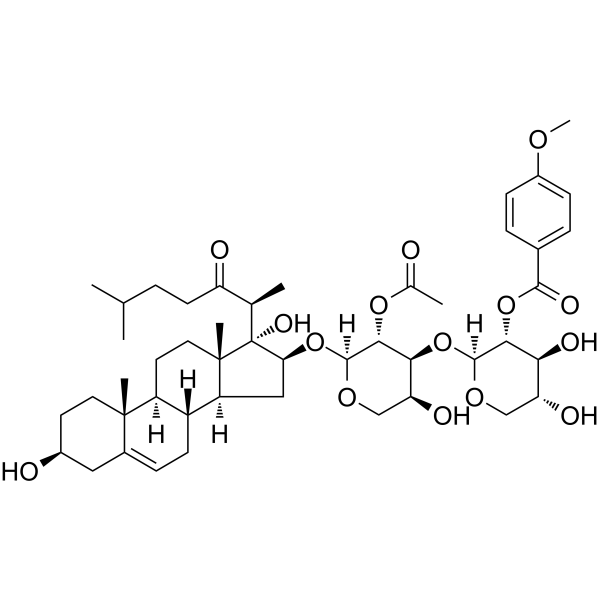
OSW-1, isolated from Ornithogalum caudatum, is a specific antagonist of ooxysterol binding protein (OSBP) and OSBP-related protein 4 (ORP4) with GI50s in the nanomolar range in human cancer lines.
loading...
    loading...
Cat. No.: HY-N7790
CAS No.: 112516-43-5
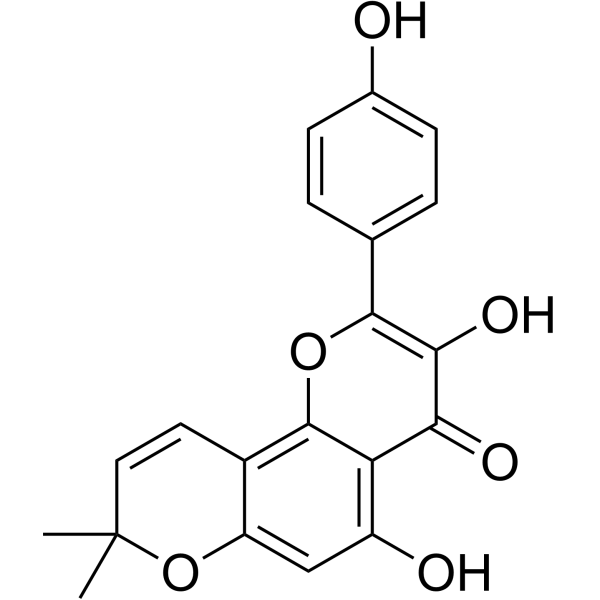
Citrusinol is a natural product isolated from D. caudatum. Citrusinol has anticancer activity and inhibits the proliferation and migration of human hepatocytes HepG 2 .
loading...
    loading...
Cat. No.: HY-N8726
CAS No.: 52589-20-5
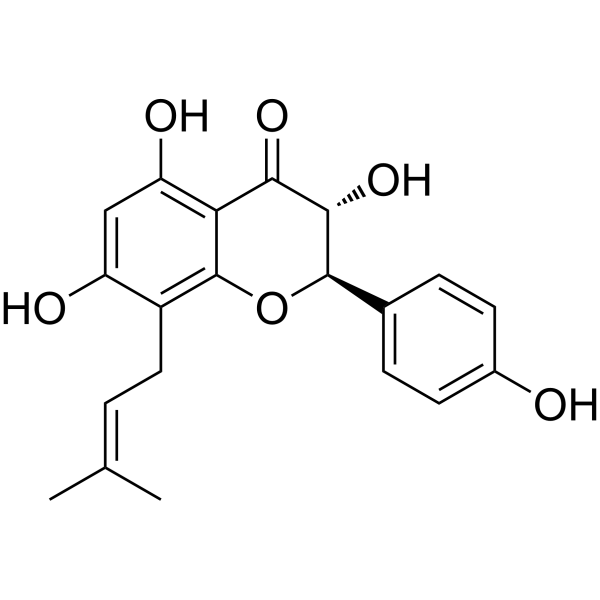
Neophellamuretin is a prenylated flavanone flavonol with both free radical scavenging activity and antifungal activity. Neophellamuretin can be used in studies related to tinea pedis .
loading...
    loading...
Cat. No.: HY-N9304
CAS No.: 70588-12-4
Synonyms: 19a-Hydroxyferna-7,9(11)-diene
Target:  

Others

Research Areas:  

Others

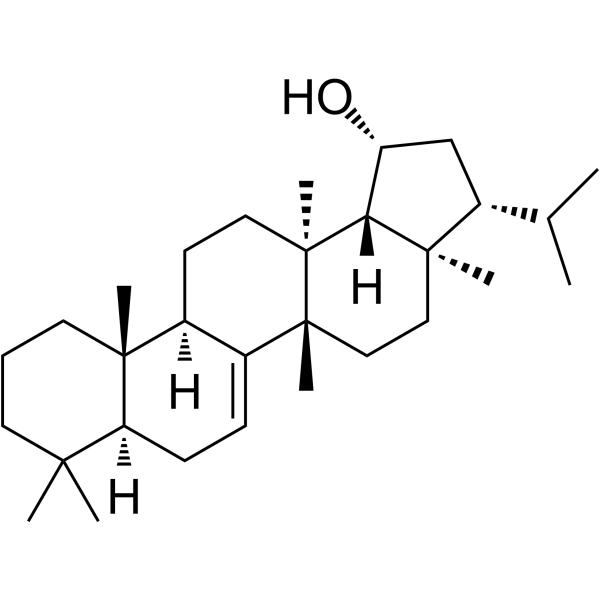
Fern-7-en-19α-ol (9a-Hydroxyferna-7,9(11)-diene) is a triterpenoid compound isolated from Adiantum caudatum .
loading...
    loading...
Cat. No.: HY-N18393
CAS No.: 88797-64-2
Caudatin 3-O-β-D-glucopyranosyl-(1→4)-β-D-oleandropyranosyl-(1→4)-β-D-cymaropyranosyl-(1→4)-β-D-cymaropyranoside (compound 6) is a C-21 steroidal glycoside that can be isolated from the roots of Cynanchum otophyllum and Cynanchum caudatum .
loading...
    loading...
Cat. No.: HY-184873
CAS No.: 463-79-6
Target:  

Others

Research Areas:  

Infection Others

Carbonic acid is a diprotic acid, acidulant and anesthetic. Carbonic acid penetrates living cells more easily than most other acids, exhibits stronger toxicity than inorganic acids at equivalent concentrations, and exacerbates ocean acidification. Carbonic acid binds reversibly to cellular proteins, acidifies cell sap and protoplasmic inclusions, inhibits Paramecium growth and various cellular functions, induces reversible cellular changes, produces lethal effects at high doses, decomposes into carbon dioxide and H2O, and participates in the maintenance of physiological pH balance .
loading...
    loading...

